

Parents often ask us, “What should my child read next?”
It’s a fair question—and an easy one to feel unsure about. Once children move beyond picture books, the reading world opens up quickly, and most of us don’t remember our own reading progression clearly enough to know what the next right step should be.
This guide isn’t a rigid sequence or a grade-level checklist. It’s a flexible reading progression we’ve seen work well across many children—one that builds confidence, stamina, curiosity, and depth over time.
Students often move through multiple stages at once, reread favorite books, or use read-alouds and audiobooks to access more complex stories. That’s not a problem—it’s part of how real readers grow.
I've included Amazon links throughout so you can get any of our recommendations for your children.
And if your kids are a bit older, skip ahead towards the latter sections of this article.
1. Explode the Code before Reading: Sound, Letters, and Confidence
Before kids are truly “reading,” they’re learning how sounds and letters work together.
We start with Explode the Code A, B, and C—short, simple prep books that help students:
- Recognize letters
- Connect sounds to symbols
- Begin blending and decoding
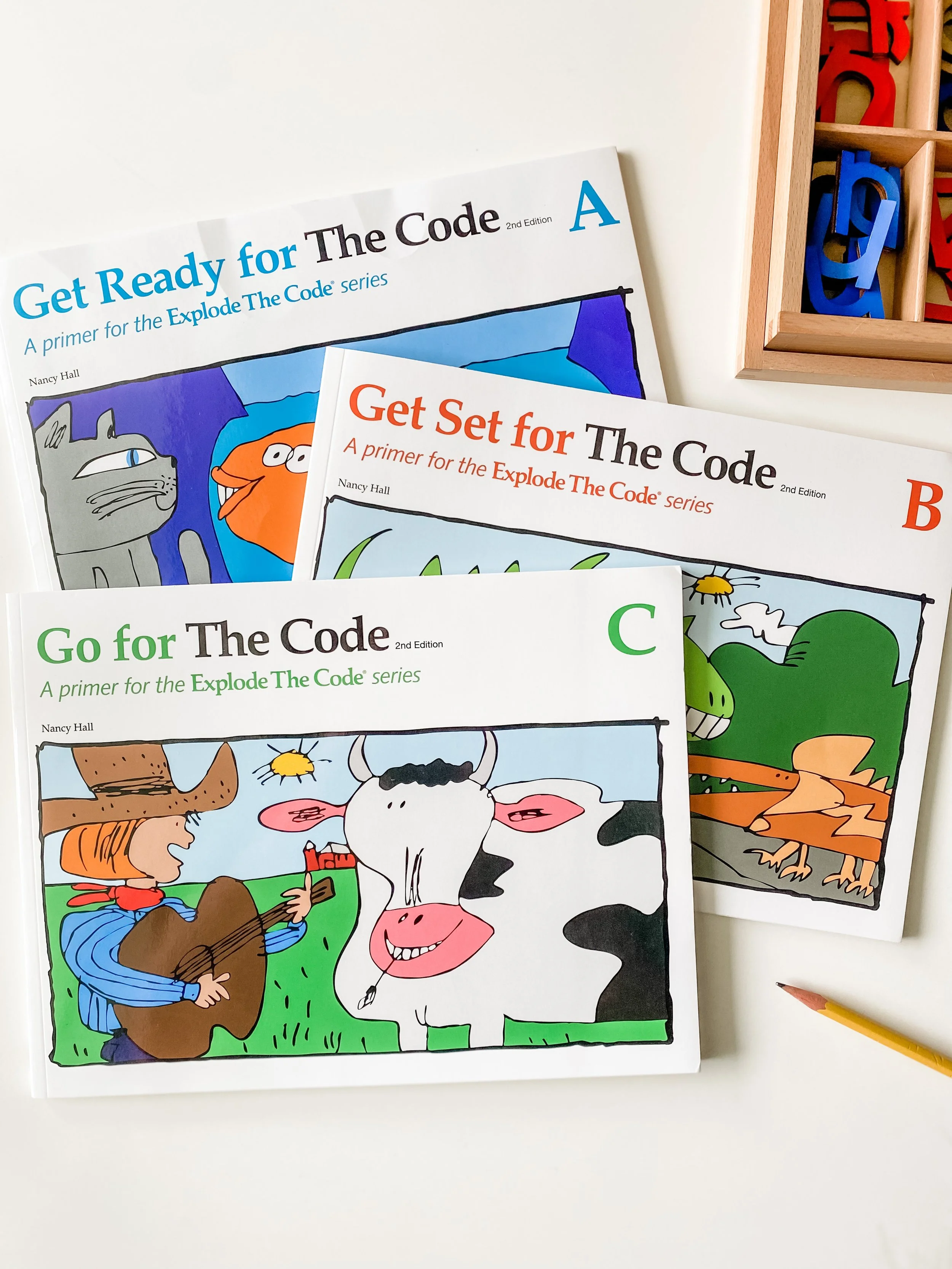
These books are intentionally approachable. After the first lesson or two, many preschoolers and kindergarteners can work through them independently, which is huge for confidence.
This stage isn’t about speed. It’s about realizing:
“Oh—I can do this.”
Here's what it looks like on the inside:
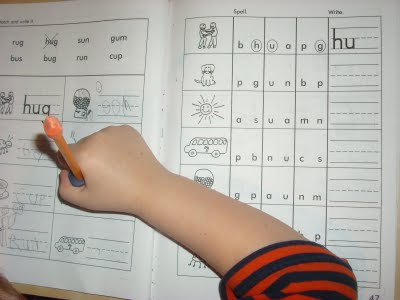
2. Primary Phonics Readers: Practicing One Skill at a Time
After Explode the Code, we move into Primary Phonics readers—the color-coded sets that focus on one reading skill at a time. These are the books where kids practice decoding, fluency, and confidence before story complexity really ramps up.

Each color level includes several short books. Students:
- Read through a color set. Students read 3–4 books per color
- Each set focuses on a particular phonics or decoding pattern
- Practice until reading feels smooth
- When a child can read a color set comfortably, they read aloud to an adult and move on
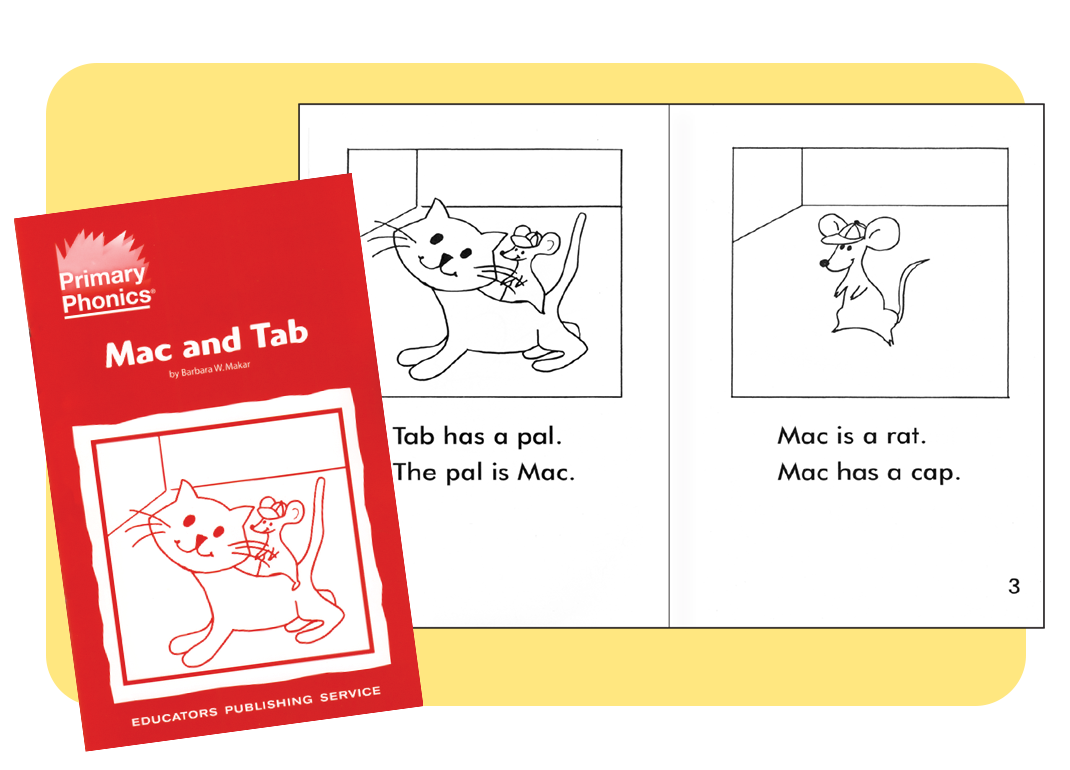
This step builds fluency without overwhelm. Kids feel successful quickly—and that matters.
3. Dr. Seuss’s Big Book of Stories: Big, Playful Stories with Familiar Characters
Once basic reading feels solid, we introduce Dr. Seuss's Big Books.
These stories are longer, sillier, and full of:
- Rhyming
- Invented words
- Strong rhythm and pacing
Because many kids already know these characters, the challenge feels fun rather than intimidating.
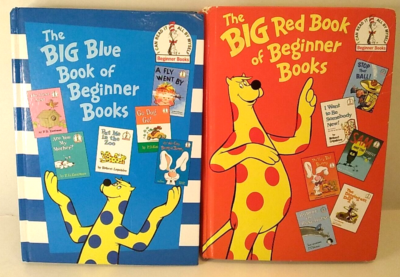
We have the red, blue and green books, but any of them are great.
We usually aim for:
- 4–5 stories (or one full big book)
- Reading over multiple sittings if needed
This is where kids learn that reading isn’t just decoding—it’s entertainment.
Here, you can see how there are more words on each page than there were in the Primary Phonics readers, but not so much more that it will feel intimidating to students. It's in the realm of proximal development.

4. Simple Chapter Books: Stories Kids See Themselves In
Next, we often introduce very short chapter books—an important bridge between early readers and longer stories.
At this stage, books are usually 80-100 pages, with short chapters, larger text, and engaging illustrations. They give students the experience of reading a “real book” without overwhelming them, and they help build confidence, stamina, and enjoyment.
Two favorites at this level are Yasmin and Jaden Toussaint.
Yasmin books follow a curious, creative young girl as she solves everyday problems using imagination and persistence. The stories are accessible and relatable, and many editions include simple activities at the end, making them especially supportive for new readers.
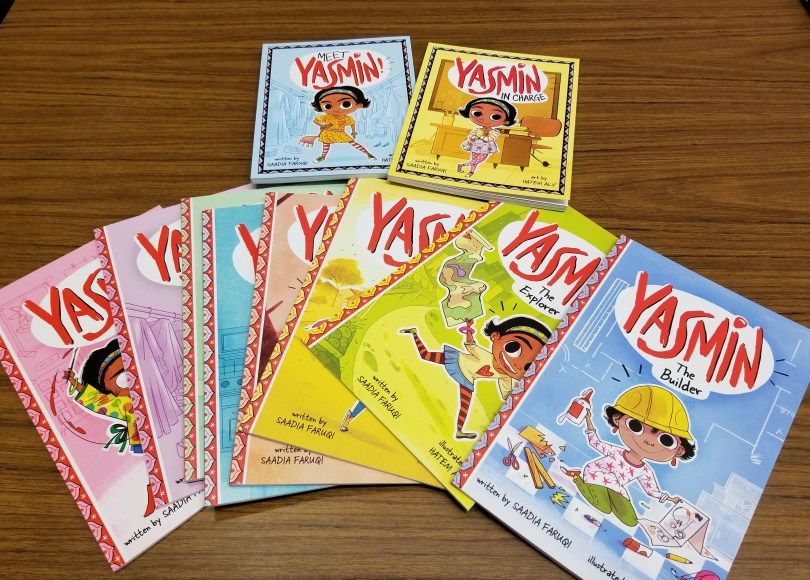

Jaden Toussaint books offer a slightly longer, more narrative-driven experience. With humor, personality, and strong storytelling, they’re great for kids who are eager for a fuller story while still needing text that feels manageable.


At this level, students often mix and match—reading a few from each series depending on their interests. Both options help readers practice fluency, experience story structure, and see themselves reflected in the books they’re reading.
5. Reading Together Still Counts (Read-Alouds & Audiobooks)
One important thing to know about this progression: not all reading has to be independent to be valuable.
In fact, some of the most powerful reading growth happens through read-alouds and audiobooks.
As a staff, we read The Read-Aloud Family, which was eye-opening in how clearly it lays out the research behind reading aloud—at school and at home—and how intentional read-alouds support vocabulary, comprehension, attention, and emotional connection to books.

We strongly recommend it to families who want to build reading into daily life in a way that feels meaningful rather than forced.
Read-Alouds at School
Right now, our elementary students are doing a shared read-aloud of A Wrinkle in Time.
What’s especially meaningful is that they chose it. They had options, and they gravitated toward a book that is:
- linguistically rich
- conceptually challenging
- emotionally engaging
Even though it’s not a book most of them would read independently yet, they’re deeply invested—because listening allows them to focus on ideas, characters, and themes without getting stuck on decoding.
Audiobooks at Home (Especially at Bedtime)
Audiobooks are another powerful tool, especially at night.
Listening to stories like Matilda or Charlie and the Chocolate Factory at bedtime allows children to:
- relax into language
- absorb story structure and vocabulary
- associate books with comfort and calm

It’s perfectly okay if kids listen to the same audiobook over and over. Familiarity builds fluency, and repetition deepens understanding.
(And yes—sometimes the adult falls asleep too. It happens. Try not to fall asleep before your child. No promises.)
Rereading Is Not Going Backwards
One thing we want to say clearly: rereading is not regression.
Kids often reread:
- Magic Tree House
- Goosebumps
- graphic novels
- favorite audiobooks
This is how they:
- build fluency
- gain confidence
- notice new details
Children move on when they’re ready. Repetition is often the bridge—not the barrier.
6. National Geographic: Nonfiction Readers That Spark Obsession
This is where many kids fall in love with reading.

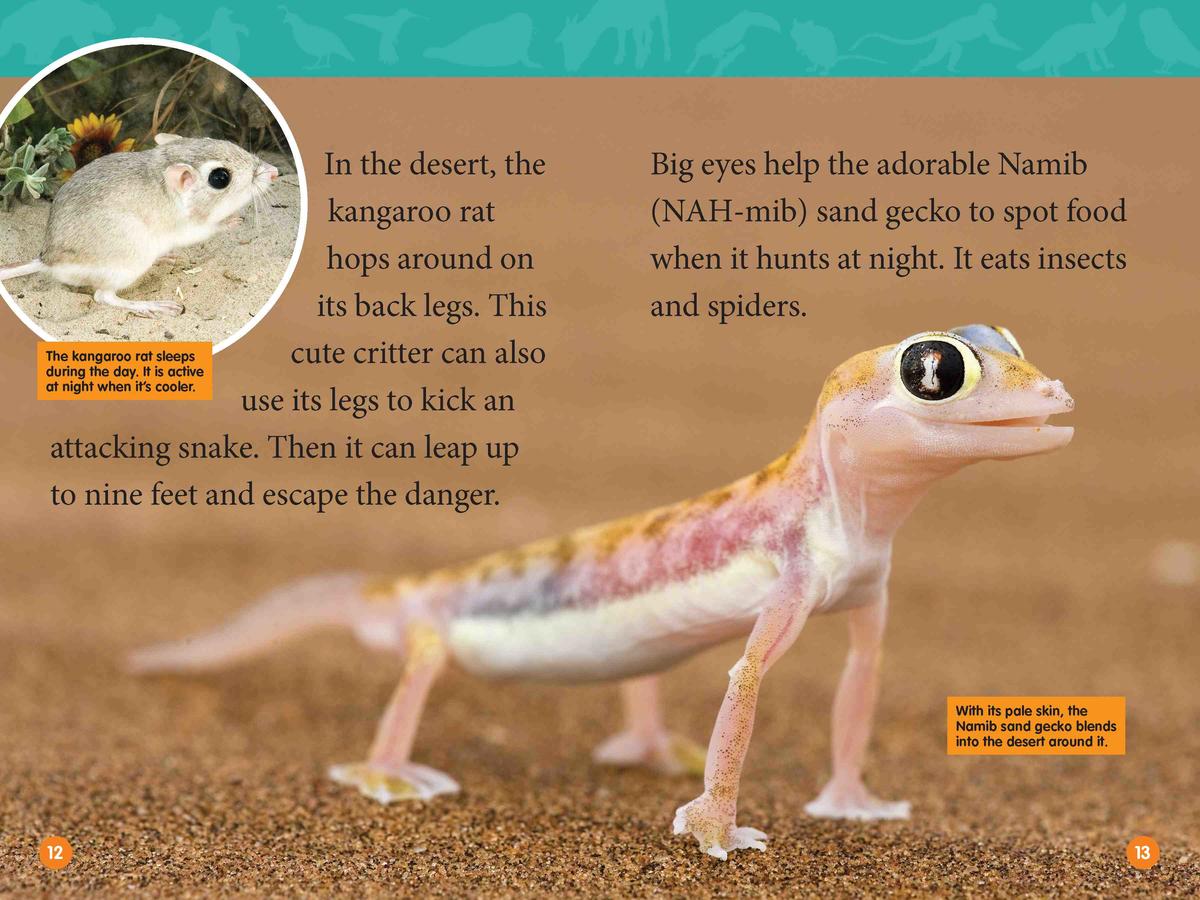
As the reading levels of the Nat Geo readers increase:
- Vocabulary becomes more complex
- Text gets denser
- Topics deepen
After reading, students often:
- Tell an adult what they learned
- Write 1–2 sentences (later 5–10 facts)
- Draw the animal they learned about (or whatever was the main topic of the book)
Many kids happily read 20–30 Nat Geo Readers, sometimes more. Older students still enjoy them.
We often turn this into a project:
Create an “Atlas of Amazing Animals” with one Atlas page per Nat Geo book.
6. Magic Tree House: First “Real” Chapter Books
After nonfiction fluency, students are ready for their first sustained fiction experience. The Magic Tree House books are often that bridge. At around 100 pages, they introduce a continuous plot, recurring characters, and the experience of staying with a story over time—without overwhelming new chapter book readers.
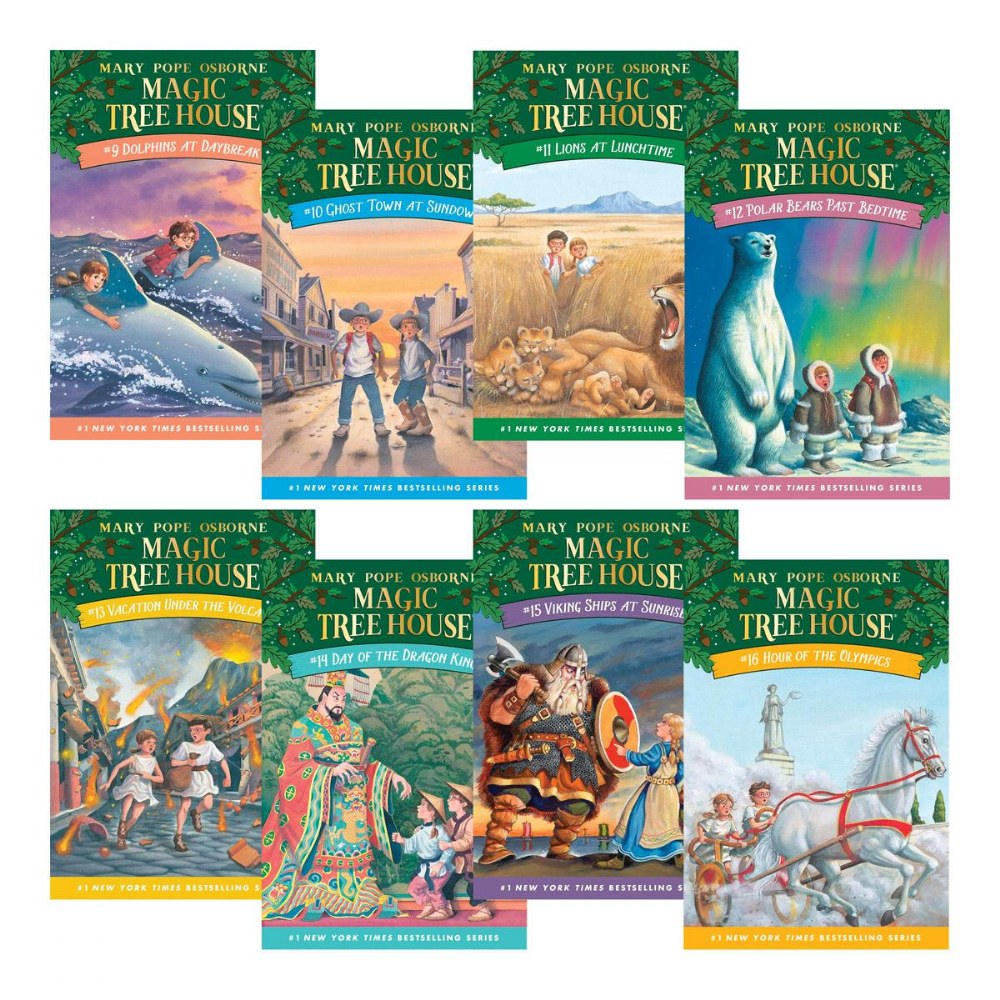
We typically read the first eight books, often aloud or with adult support, to help students practice fluency, ask questions as they go, and build confidence. Because each story is grounded in a real place, time period, or topic, students can easily connect their reading to history and science. For curious readers who want to go deeper, the research companion books offer an optional next step, making Magic Tree House a natural launch point into both longer fiction and content-rich reading.

The research companions are optional but excellent for curious kids who want to go deeper into the history or science behind each story.

7. Open Choice: Small Chapter Books (100–150 Pages)
Once Magic Tree House feels comfortable, students move into open-ended chapter books around 100–150 pages.
This is often the first time kids experience real ownership over their reading life. They’re no longer following a prescribed sequence—they’re choosing books based on interest, mood, and curiosity. At this stage, reading starts to feel personal.
Common favorites include:
- I Survived
- Goosebumps
- Junie B. Jones
- Sophie Washington
- The Magic School Bus Chapter Books
At this level, kids are practicing:
- reading longer texts independently
- following more complex plots
- developing reading stamina
- discovering what kinds of stories they actually enjoy
Graphic novels often live here too, alongside traditional chapter books. What matters most is not the format, but that students are reading consistently and with engagement.
8. Longer Chapter Books (200+ Pages)
From there, students gradually move into longer novels, typically in the 200–300 page range. This is less about decoding or basic fluency and more about endurance, attention, and deeper storytelling.
Books at this stage often include:
- Judy Blume books
- Spy School series
- Wonder
- Hatchet
- The City of Ember
This transition usually happens over time, not all at once. Students might alternate between shorter books and longer ones, or read longer books with more support at first. That’s normal.
By this point, many students no longer need a tightly curated list. They’ve built the skills and confidence to explore, abandon books that don’t fit, return to favorites, and take risks on new genres. This is a sign that the progression has done its job: it has created a self-directed reader.
A Note on Where This Leads (Conclusion)
This progression isn’t about racing to harder books or checking off titles. It’s about helping children become confident, capable readers who know themselves.
By the time students reach the later stages of this ladder, they’re no longer just learning how to read. They’re reading to:
- understand themselves
- explore history and the world
- grapple with ideas
- and make sense of real experiences
Some books will be long. Some will be short. Some will be revisited again and again. That’s not inconsistency—that’s what a real reading life looks like.
If your child is reading across multiple levels, listening to audiobooks above their independent reading level, rereading favorites, or moving forward in bursts rather than straight lines—you’re not doing it wrong. You’re doing it right.
Our goal isn’t to produce students who can “handle” books.
It’s to raise readers who want to keep reading long after they don’t have to.